How Much Does a Detached Shop, Barn, or Outbuilding Add to a Home's Sale Price in Central Utah? (+ Nov 2, 2026 UAD 3.6 Rules)
If you spend money pouring concrete, framing, and wiring a 40x60 detached shop or barn in Juab, Sanpete, Millard, or Sevier County, it will almost never add dollar-for-dollar construction cost to your home’s sale price—even though a good shop makes a rural property sell much faster and for tens of thousands of dollars more than a similar place without one. When you list a country property, what buyers will pay (and what a lender’s appraiser can support) comes from closed sales of properties with similar outbuildings, not the contractor’s invoice.
I work both sides of this math every week: I help rural homeowners price and sell properties across Central Utah as a REALTOR® with Heritage Realty Group, and I have appraised homes, cabins, and acreage in these counties since July 2005 as an active Certified Residential Appraiser with MK Appraisals. With the November 2, 2026 Fannie Mae and Freddie Mac UAD 3.6 appraisal report overhaul putting outbuildings under a much brighter spotlight, here is how shops, barns, and animal setups actually affect your sale price—and how to prep yours before a buyer or appraiser walks the property.
Cost vs. Sale Price: How Much Does a Shop Add to a House Price in Utah?
One of the hardest conversations in rural real estate happens at the kitchen table when a seller pulls out the receipts for a brand-new detached shop.
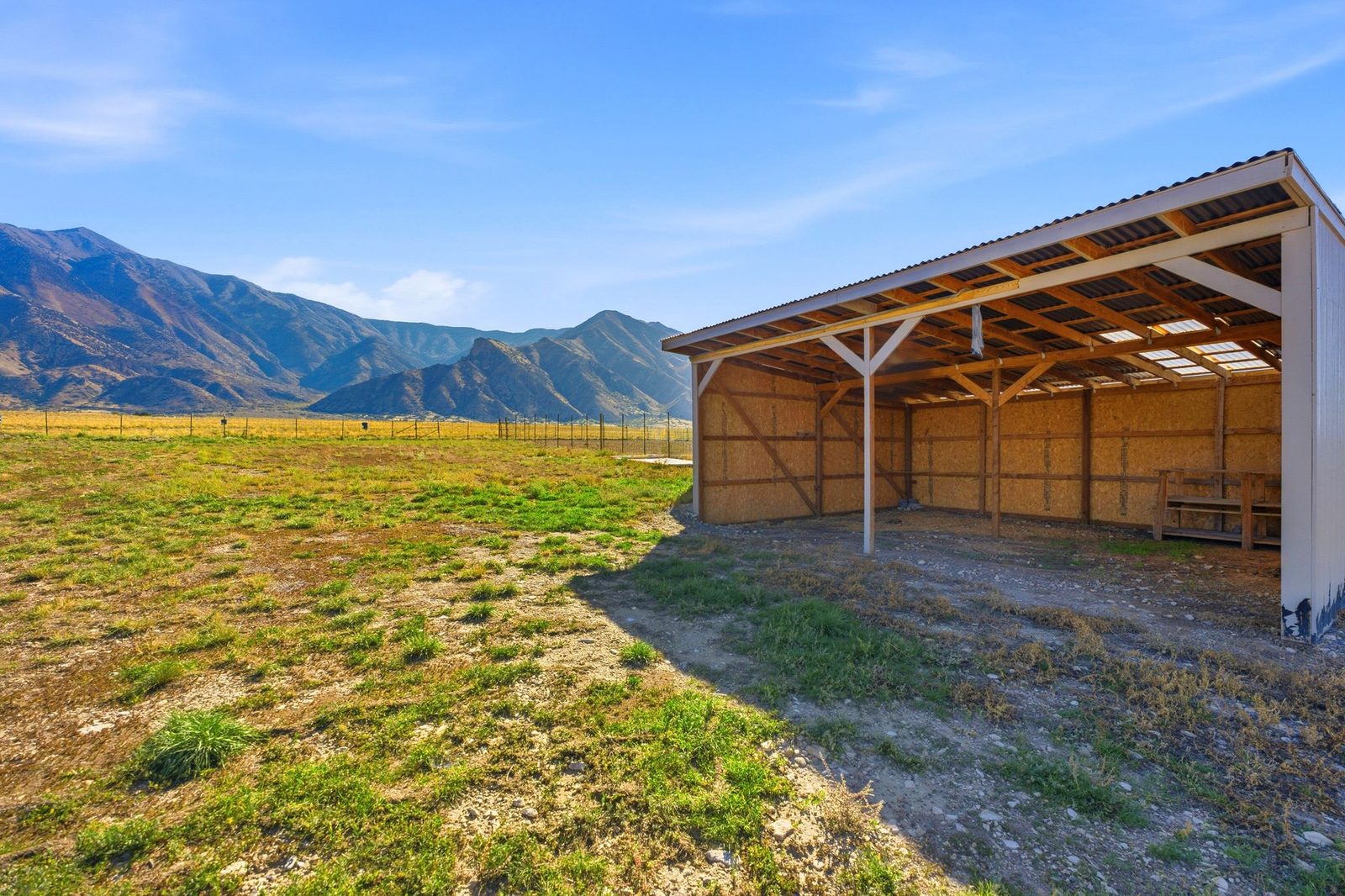
Take a simple illustrative example: suppose a homeowner outside Nephi, Mona, Ephraim, Manti, Delta, or Richfield spends $90,000 building an insulated 40x60 metal shop with a 14-foot RV door, concrete slab, and 220V power. Does that automatically tack $90,000 onto the home’s sale price?
Almost never dollar-for-dollar. Here is why:
- Construction Cost Is Not Market Reaction: In both real estate pricing and a formal detached shop appraisal in Utah, cost and market price are two different things. Some buyers will pay a major premium for a heated shop with a lift bay and RV hookups; other buyers just want a place to park a tractor and keep hay dry.
- Paired-Sales Proof: When a buyer’s lender orders an appraisal, the appraiser cannot simply add the replacement cost of the building. The appraiser has to find closed comparable sales in the local market—with and without similar shops or barns—to extract what buyers actually paid for that improvement.
- The Real-World Advantage: Even when a shop or barn contributes a percentage of its build cost rather than 100% dollar-for-dollar, it is often the single feature that makes a Central Utah country home stand out. In Juab, Sanpete, Millard, and Sevier Counties, buyers relocating from the Wasatch Front with trucks, side-by-sides, trailers, or horses will pass over five properties without a shop to buy the one that already has it built, permitted, and wired.
Why Do Online Price-Per-Square-Foot Estimates Fail on Country Homes with Shops?
If you plug a rural home with a detached shop and five acres into an automated online estimator—or let an agent price it using subdivision price-per-square-foot math—the number you get back is nearly useless.
Under ANSI Z765 measuring standards and residential appraisal rules, only finished, above-grade living space inside the main dwelling counts toward Gross Living Area (GLA). Attached garages, detached shops, barns, tack rooms, hay sheds, and loafing sheds never count as house square footage.
When a simplistic formula divides sale price by house square footage:
- It treats a 2,000-square-foot home on a quarter-acre town lot the same as a 2,000-square-foot home on five acres in Mona or Spring City with a 40x60 shop, pipe corrals, and irrigation water shares.
- Even worse, it sometimes compares construction types that should never be mixed—such as comparing a HUD-code manufactured home (which is built to federal HUD code, must be compared to other manufactured homes in an appraisal, and is priced that way) against a site-built stick home or a modular home (which is built off-site to the same or similar building code as a site-built home and costs more to build and install).
I break down why that shortcut fails in why price per square foot doesn’t work in every situation, and you can test a non-PPSF starting ballpark on my rough home & land price range tool.
How Does Horse Property Zoning in Mona, Nephi, and Sanpete UT Affect Outbuilding Price?
A barn, stable, or corral setup only brings top dollar when a buyer can legally use it for animals. When buyers search for horse property zoning in Mona, Nephi, or Sanpete UT (or in Millard and Sevier Counties), we verify three things before setting a list price or writing an offer:
- Zoning & Animal Units: Town limits and county agricultural-residential zones have strict minimum acreage rules and animal-unit caps. A two-acre lot with a four-stall barn inside town limits where zoning only allows two horses will not price the same as five acres on county ground with full animal rights.
- Usable Setup vs. Cosmetic Fencing: Safe pipe or post-and-rail fencing, frost-free hydrants at the corrals, hay storage, and trailer turnaround access add real utility that horse buyers pay for. (See my full breakdown on pricing a horse property in Juab County.)
- Water for Stock and Pasture: A barn with dry pasture prices very differently than a barn backed by a stock-water well right and irrigation shares.
What Changes Under the Nov 2, 2026 UAD 3.6 Appraisal Outbuilding Rules?
If you are selling or buying a property with a shop, barn, or ADU on a conventional loan, you need to know about the UAD 3.6 appraisal outbuilding rules in Utah.
Fannie Mae and Freddie Mac require the redesigned UAD 3.6 Uniform Residential Appraisal Report starting Nov 2, 2026; some lenders have a temporary exception (through May 19, 2027), and the old 2.6 forms are fully retired by June 28, 2027. As I covered in my full Central Utah UAD 3.6 appraisal guide, the way an appraiser arrives at value stays the same, but how your outbuildings get measured, photographed, and reported changes dramatically:
- From ~190 Data Elements to 900+: According to Working RE magazine, the legacy UAD 2.6 report had about 190 data elements, while UAD 3.6 has more than 900.
- Dedicated Outbuilding & Vehicle Storage Sections: Instead of a one-line note on the sales comparison grid, UAD 3.6 gives outbuildings, vehicle storage (including garage/shop square footage), ADUs, and solar/energy systems their own structured sections.
- Interior and Exterior Outbuilding Photos: Appraisers must capture both exterior and interior photos of outbuildings when applicable, measure their gross building area, and document their construction and utility hookups.
- Structured Defect Table (“Subject To” Risk): Every defect affecting safety, soundness, or structural integrity goes into a structured table with a photo and a recommended action. Any defect marked for repair, inspection, or completion makes the appraisal “subject to,” which triggers a re-inspection before the loan can close.
- What This Means for Appraisal Fees and Turnaround: Because field inspections take longer—measuring outbuildings, garage square footage, ceiling heights, and front door elevations, plus categorizing photos and completing 900+ potential schema fields—appraisal fees locally are going up (more time on site and at the desk costs more). On turnaround, plan on about two extra days, give or take, depending on how busy appraisers are, and build that cushion into your contract’s appraisal deadline.
Seller Checklist: How to Prep Your Shop, Barn, or Outbuilding Before Listing
When I list a rural property in Juab, Sanpete, Millard, or Sevier County, we don’t leave the shop or barn as an afterthought. Doing these five steps before we go live on the MLS helps both buyers and the lender’s appraiser see the full picture:
- Have Every Door Open and Accessible Before Showings and Appraisal Day: If a shop, tack room, hay barn, root cellar, or detached garage is padlocked when the appraiser arrives, the appraiser cannot verify the interior—or may have to come back for a second trip.
- Put Together a 1-Page Shop & Outbuilding Spec Sheet: Leave a printed sheet on the kitchen counter (and in the MLS supplements) listing the exact footprint (e.g., 40x60 = 2,400 sq ft), eave and overhead door height, concrete slab thickness, 110V/220V electrical service, heat/insulation, water/septic hookups, and the year it was built and permitted.
- Fix Safety Items Before Anyone Walks In: Missing handrails on loft stairs, broken steps, exposed electrical wiring, broken window panes, or deteriorating wood in an outbuilding can get flagged in the UAD 3.6 defect table. Fixing a handrail or step before listing is cheap; waiting for a “subject to” repair condition can delay closing.
- Clear Path to the Walls and Electrical Panel: Make sure a buyer and an appraiser can see the slab, framing, subpanel, and heating unit, and can pull a tape or laser measurement from wall to wall.
- Price the Whole Property Together: Read my guide on what to fix before listing a rural home (and what to skip) and visit my Central Utah selling page to see how I walk properties in person before recommending a list price.
Frequently Asked Questions
How much does a detached shop add to a house’s sale price in Central Utah?
A detached shop rarely adds 100% of its new construction cost dollar-for-dollar, but in Juab, Sanpete, Millard, and Sevier Counties it regularly adds tens of thousands of dollars to the sale price and helps the property sell much faster. The exact amount depends on the shop’s size, concrete slab, door height, power/heat, permits, and what local buyers recently paid for comparable properties with similar shops.
Does a detached shop or barn count toward a home’s square footage in an appraisal?
No. Under ANSI Z765 and appraisal standards, only finished above-grade living area inside the main residence counts toward Gross Living Area (GLA). Detached shops, barns, and garages are valued and adjusted separately on their own lines in the appraisal and CMA.
What do the Nov 2, 2026 UAD 3.6 appraisal rules require for outbuildings?
Starting November 2, 2026 (with temporary exceptions for some lenders until May 19, 2027, and full retirement of the old forms by June 28, 2027), UAD 3.6 gives outbuildings their own dedicated section in the appraisal report, requiring gross building area, interior and exterior photos when applicable, and structured reporting of any safety or structural defects.
Do I need to have my barn and shed open for the home appraiser?
Yes. Make sure every shop, barn, shed, and outbuilding is unlatched and accessible on appraisal day so the appraiser can measure the structure and take the required interior and exterior photos without a delay or re-inspection fee.
Mike Price, REALTOR®, Heritage Realty Group · Certified Residential Appraiser, MK Appraisals (active since July 2005) · 2026 UTCAP President-Elect. Mailing address: P.O. Box 431, Spring City, UT 84662. A comparative market analysis or pre-listing price opinion as a REALTOR® is not a formal certified appraisal; if you need an appraisal, that is a separate, paid assignment.